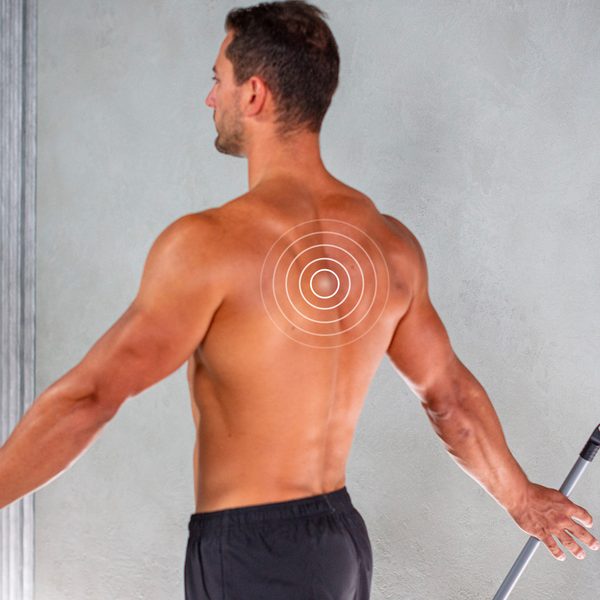
How it shows up
Burning or pressure between the shoulder blades that announces itself after a few hours of sitting and eases with movement. Sometimes it speaks up on a deep breath or when twisting the torso. The urge to stretch backwards is strong — and it helps for a few minutes.
Where it usually comes from
The thoracic spine is the least mobile part of the spine; the ribs hold it. Sitting hunched leaves it bent, and the muscles between the shoulder blades spend the whole day stretched — holding the chest so it does not fall further forward.
That is why strengthening usually does not help. A muscle that is overstretched and tired from holding does not relax because you add load. The position it works in has to change first.
How spiral stabilisation approaches it
The chest needs to open first; only then does engaging the muscles make sense. Spiral stabilisation uses a diagonal downward arm pull: the shoulder blades draw together and down, the thoracic spine lengthens, and the muscles between the blades finally get a position in which they can let go.
Breathing into the back is part of the exercise, not an extra — a breath into the area between the shoulder blades opens that part of the chest from the inside.
When to see a doctor first
Immediately, not after exercising: a gripping pain that radiates into the arm or jaw, together with breathlessness, sweating or nausea. That does not belong on an exercise mat.
Also pain that started after an injury, wakes you at night, or comes with fever and weight loss.
Related exercises
Exercises done for pain between the shoulder blades. You can read about them here; the full instructions and video are in the Spiralista app.
B11 Circles
Circles back standing
L12 Crawl
Crawl back standing
B15 Windshield Wipers
Windshield Wipers back standing
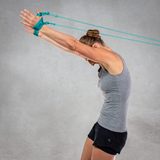
F11 Circles
Circles back leg on a mat
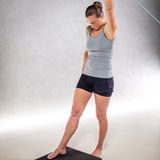
F12 Crawl
Crawl back leg on a mat
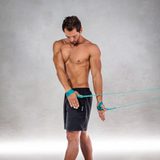
F15 Windshield Wipers
Windshield Wipers back leg on a mat
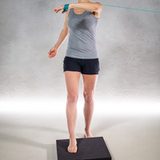
F16 Surface
Surface sideways leg on a mat
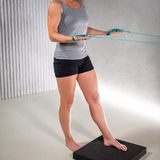
I1 Book
Book front spine stretching
What to do about it
A guide in the Spiralista app takes you through the exercises for this condition day by day — from the first exercise to the full sequence.
- At homeAn elastic cord and a bit of wall space are enough.
- ShortA few minutes a day, not an hour in the gym.
- Day by dayThe guide shows what comes next today.