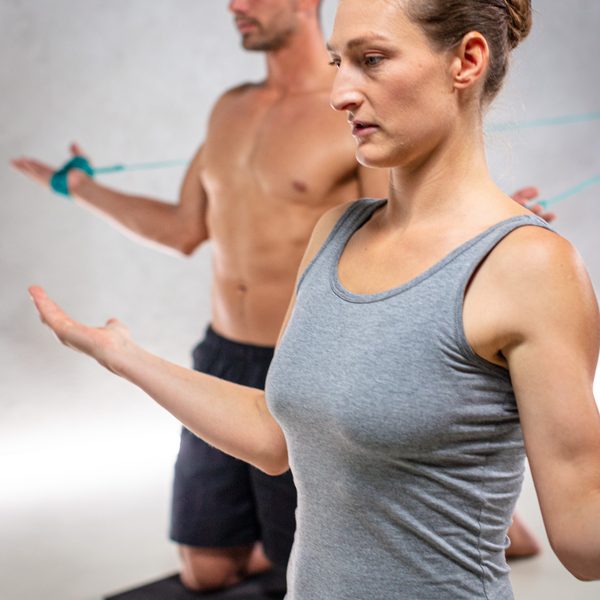
How it shows up
From behind you see the rounded outline of the thoracic spine; from the front a sunken chest and shoulders rolled inwards. The head is usually carried in front of the body's axis. Pain between the shoulder blades and quick fatigue when standing often go with it.
A simple check: stand with your back to a wall. If the back of your head only reaches the wall by tipping the head back, the thoracic spine is holding the body in a bend.
Where it usually comes from
It comes from hours spent bent forward — at a desk, at a monitor, over a phone — and in children from a heavy school bag, especially one carried on a single shoulder. The chest muscles shorten, the muscles between the shoulder blades overstretch, and the body gradually fixes the new shape as its default.
That is why it worsens during growth spurts and why sedentary work keeps it going in adulthood.
How spiral stabilisation approaches it
A rounded back does not straighten because you tell yourself to stand up straight — that lasts a minute, because willpower does not replace muscle. Spiral stabilisation lengthens the shortened front while teaching the back chains to pull the shoulder blades down, so the upright position holds by itself.
What matters is that the spine lengthens upwards while it happens. The most common mistake when “straightening up” is to push the chest out and arch the lower back — that hides the rounded back and adds lower back pain to it.
When to see a doctor first
If the curve is rigid and cannot be straightened voluntarily, if it worsens quickly during growth, or if the back hurts even at rest. In children and teenagers, a posture that changes fast always belongs in front of a doctor.
Related exercises
Exercises done for a round back. You can read about them here; the full instructions and video are in the Spiralista app.
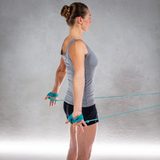
B3 Arrow
Arrow front standing
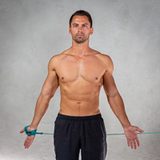
B9 Sideway Arrow
Sideway Arrow standing
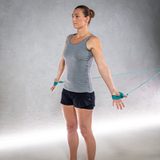
B10 Back Arrow
Back Arrow standing
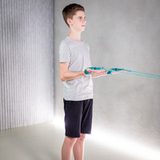
B1 Book
Book front standing
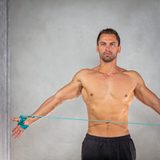
B5 Hitchhiker
Hitchhiker sideways standing
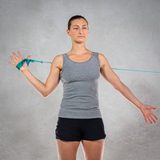
L19 Hello
Hello sideways standing
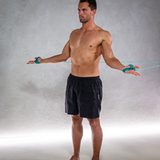
B8 Back Scales
Back Scales standing
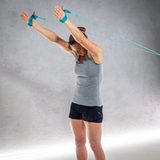
B11 Circles
Circles back standing
What to do about it
A guide in the Spiralista app takes you through the exercises for this condition day by day — from the first exercise to the full sequence.
- At homeAn elastic cord and a bit of wall space are enough.
- ShortA few minutes a day, not an hour in the gym.
- Day by dayThe guide shows what comes next today.