How it shows up
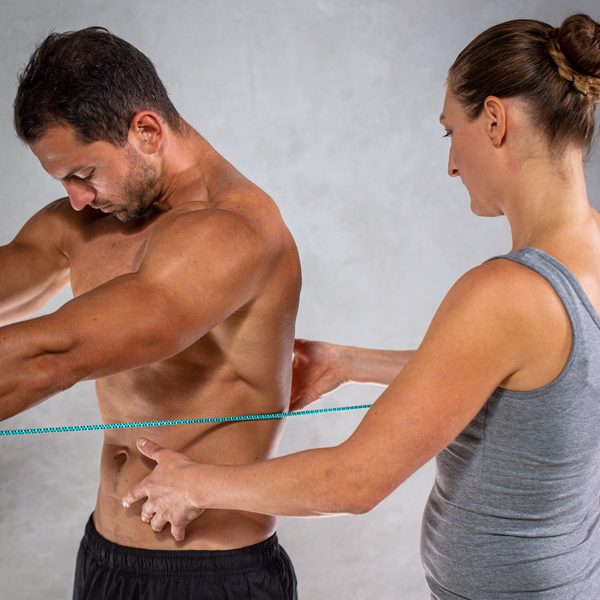
The pain sits at the side of the lower back, between the last rib and the crest of the pelvis. It tends to pull, gets stronger when you lean to the opposite side and when you stand on one leg for a while. Lying on the painful side brings relief — which is misleading, because it looks like a muscle problem.
It is almost never equal on both sides. Anyone who watches themselves for a few days usually finds the reason as well: a bag, a child carried on one hip, work with the torso turned to one side.
Where it usually comes from
The torso is held at the sides by muscles running from the pelvis to the ribs. They work as a pair and keep the trunk upright. As soon as one side is used considerably more — carrying, a one-sided sport, sitting with a leg tucked underneath — the pair stops being balanced. The shorter side pulls the pelvis up, the longer one is overstretched.
The body compensates by tilting the whole trunk slightly and then stays there. The pain ends up on the side that holds the position, not the one that caused it.
How spiral stabilisation approaches it
One-sidedness cannot be exercised away one-sidedly. Spiral stabilisation therefore works with chains that cross the body — right shoulder to left hip and the other way round — and engages both sides in alternation rather than one against the other.
The exercises are done standing and walking, because it is in the upright position that the imbalance shows. Lying down hides it, and the exercise then reinforces the very asymmetry you came with.
When to see a doctor first
Pain in the side can come from somewhere other than the back. See a doctor straight away if it comes with a fever, burning when passing urine, blood in the urine, or if it is colicky and does not depend on your position — a kidney announces itself in a similar way and has nothing to do with exercise.
The same after a fall onto the side or an impact.
Related exercises
Exercises done for pain in the side of the lower back. You can read about them here; the full instructions and video are in the Spiralista app.
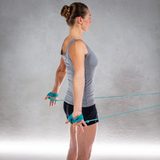
B3 Arrow
Arrow front standing
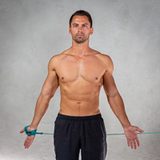
B9 Sideway Arrow
Sideway Arrow standing
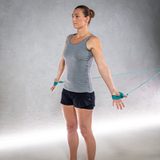
B10 Back Arrow
Back Arrow standing
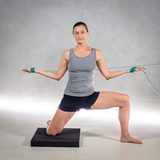
C32 Samurai
Samurai sideways kneeling
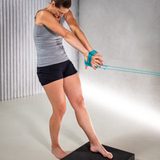
I3 Arrow
Arrow front spine stretching
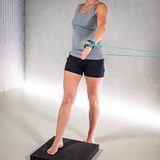
I9 Sideway Arrow
Sideway Arrow spine stretching
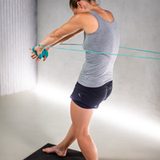
I10 Back Arrow
Back Arrow spine stretching
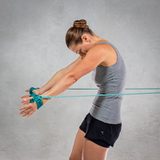
I11 Circles
Circles back spine stretching
What to do about it
A guide in the Spiralista app takes you through the exercises for this condition day by day — from the first exercise to the full sequence.
- At homeAn elastic cord and a bit of wall space are enough.
- ShortA few minutes a day, not an hour in the gym.
- Day by dayThe guide shows what comes next today.