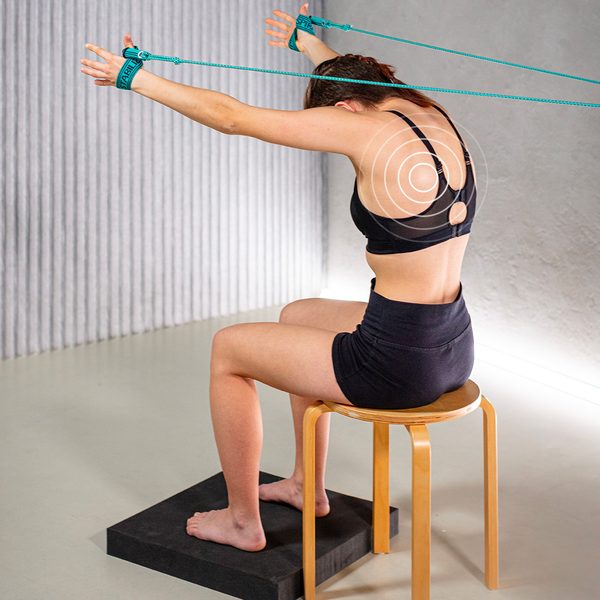
How it shows up
The pain shows up in the middle of the back between the shoulder blades, across the ribs into the sides and sometimes at the front on the breastbone. It changes with the breath, with turning the torso and with how you sit — and that dependence on position and breathing is the main difference from cardiac pain.
Shallow breathing into the upper chest is common. The in-breath stops earlier than it should, you sigh more, and the tension around the ribs keeps growing. Stiff shoulders and pain between the shoulder blades tend to join in.
Where it usually comes from
The thoracic spine is the only section firmly joined to the ribs. There are over a hundred joints there, and every breath moves them all. When you sit with a rounded back the chest closes, the ribs stop opening and the joints stay in a small range.
The body gets used to a small range within weeks. Breathing moves into the upper chest and the accessory breathing muscles in the neck start working permanently — hence the stiff neck and the feeling that you cannot take a full breath.
How spiral stabilisation approaches it
Spiral stabilisation opens the chest by pulling, not by pushing. Chains running from the arms diagonally across the torso lift the rib cage upward and apart — the ribs regain a larger range and the breath deepens by itself, without breathing exercises.
At the same time rotation returns where it belongs. When the torso turns in the chest, the lumbar spine stops doing it — which is why working with the chest also helps pain considerably lower down.
When to see a doctor first
Chest pain goes to a doctor first, not to exercise. Immediately if it is crushing or pressing, if it radiates into the left arm, neck or jaw, if breathlessness, sweating or nausea joins in, or if it came on suddenly with exertion — even when it seems to depend on position.
Quickly, too, with fever, a cough that hurts on breathing in, after a fall or a blow to the chest.
Related exercises
Exercises done for chest and thoracic pain. You can read about them here; the full instructions and video are in the Spiralista app.
B3 Arrow
Arrow front standing
B9 Sideway Arrow
Sideway Arrow standing
B10 Back Arrow
Back Arrow standing
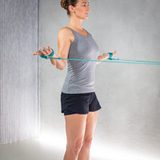
B2 Scales
Scales front standing
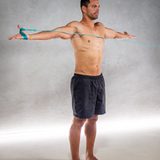
B6 Airplane
Airplane sideways standing
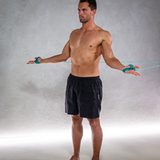
B8 Back Scales
Back Scales standing
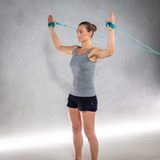
B13 Candlestick
Candlestick back standing
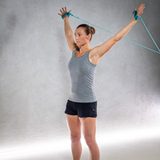
B14 V Shape
V Shape back standing
What to do about it
A guide in the Spiralista app takes you through the exercises for this condition day by day — from the first exercise to the full sequence.
- At homeAn elastic cord and a bit of wall space are enough.
- ShortA few minutes a day, not an hour in the gym.
- Day by dayThe guide shows what comes next today.