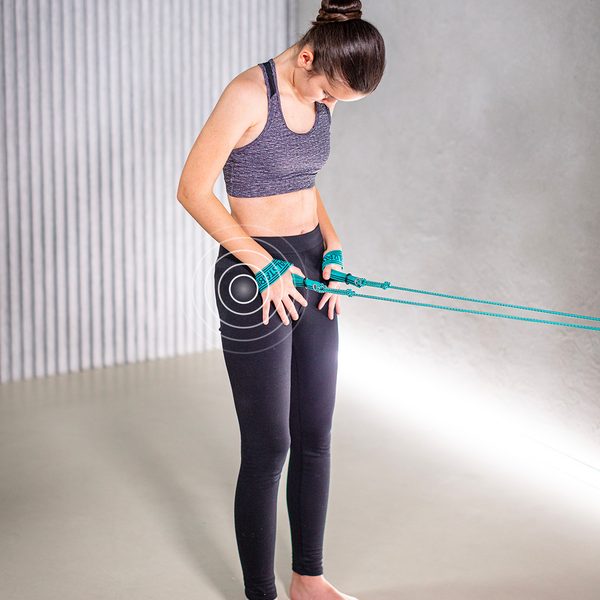
How it shows up
The pain sits in a small area low at the back that people can point to with one finger — and that is typical for the sacroiliac joint. It is made worse by getting up from a chair, turning over in bed, walking upstairs and standing on one leg for a while. Sitting cross-legged almost always sets it off.
It sometimes radiates into the buttock or the back of the thigh, but it stops above the knee. Pain going below the knee is a different question — see the last section.
Where it usually comes from
The sacroiliac joint connects the sacrum to the pelvis and moves by only a few millimetres. That is exactly why it is held by ligaments and muscles rather than by its own shape. As soon as one half of the pelvis starts working differently from the other — after prolonged one-sided load, after pregnancy, after a limp caused by a sore knee — that small movement becomes uneven.
The joint tolerates it for a while. Then the surrounding tissue helps out with tension, and in that tension comes the pain you can point to.
How spiral stabilisation approaches it
The pelvis cannot be stabilised from below. It is held by chains that start at the shoulders and end at the opposite leg — which is why spiral stabilisation works with the arms and with walking even when the pain is low at the back.
The exercises restore symmetry between the two halves rather than strength in one of them. The aim is not to brace the pelvis into stillness but to give it even movement with every step.
When to see a doctor first
See a doctor if the pain shoots below the knee, if the leg is getting weak or numb, if it started after a fall, and always in pregnancy — pelvic pain there has rules of its own.
Also with fever, night pain that does not depend on position, or if problems with the bladder or bowel appear.
Related exercises
Exercises done for pelvic pain. You can read about them here; the full instructions and video are in the Spiralista app.
B3 Arrow
Arrow front standing
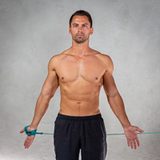
B9 Sideway Arrow
Sideway Arrow standing
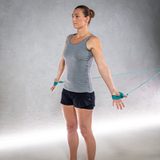
B10 Back Arrow
Back Arrow standing
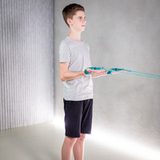
B1 Book
Book front standing
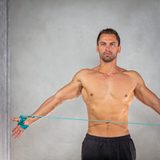
B5 Hitchhiker
Hitchhiker sideways standing
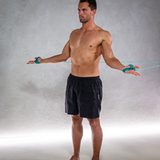
B8 Back Scales
Back Scales standing
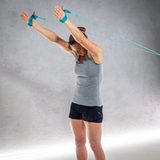
B11 Circles
Circles back standing
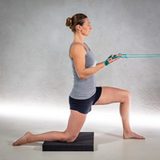
C29 Front Fencer
Front Fencer kneeling
What to do about it
A guide in the Spiralista app takes you through the exercises for this condition day by day — from the first exercise to the full sequence.
- At homeAn elastic cord and a bit of wall space are enough.
- ShortA few minutes a day, not an hour in the gym.
- Day by dayThe guide shows what comes next today.