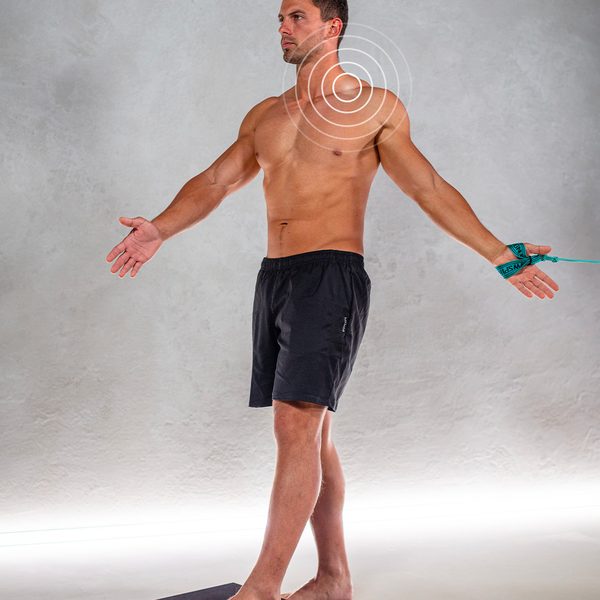
How it shows up
A hard ridge between neck and shoulder, tender to the touch, usually on both sides but not evenly. The shoulders sit higher than they should and refuse to drop even when you remember to lower them. By evening a pressure appears at the back of the head.
The typical pattern: after a massage or a sauna there are a few quiet hours, then the tension returns in exactly the same shape. That says the muscle is not damaged — it is being given work it should not be doing. In children the school bag is often behind it — how to pick one is in the article How to choose the right school bag?.
Where it usually comes from
The upper trapezius is only meant to steady the head and the shoulder. But when the shoulder blade has no support from below, this muscle takes on its whole weight — and holds it eight hours a day without a break. That is where the ridge comes from: not a cramp, but a muscle that never gets time off.
Keyboard work makes it worse twice over: the arms hang forward, so the shoulder blade is pulled down and forward, and the shoulders lift towards the ears to compensate. Add stress, which affects this muscle the same way bad positioning does — only faster.
How spiral stabilisation approaches it
Loosening the trapezius by stretching or massage means switching off the guard and leaving the job to nobody. That is why it lasts a few hours. Spiral stabilisation goes the other way: first the muscles that pull the shoulder blade down and towards the spine engage, so the shoulder finally rests on something. The trapezius has its work taken away and lets go on its own.
The exercises are done standing, pulling an arm against elastic resistance diagonally down and back — the same movement as walking, only amplified. Consciously telling yourself to drop your shoulders is not enough; willpower does not hold a muscle, a chain does.
When to see a doctor first
If the tension started after an injury or a rear-end collision, if tingling or weakness radiates from it into the arm, or if dizziness and vision problems join in. Also if the pain sits on one side only, wakes you at night and does not change with position.
Related exercises
Exercises done for neck and trapezius pain. You can read about them here; the full instructions and video are in the Spiralista app.
B3 Arrow
Arrow front standing
B10 Back Arrow
Back Arrow standing
B9 Sideway Arrow
Sideway Arrow standing
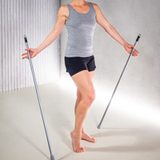
E43 Tourist
Tourist front shifting weight
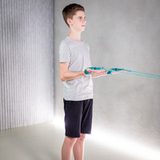
B1 Book
Book front standing
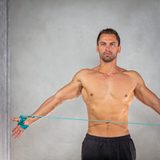
B5 Hitchhiker
Hitchhiker sideways standing
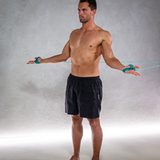
B8 Back Scales
Back Scales standing
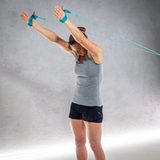
B11 Circles
Circles back standing
What to do about it
A guide in the Spiralista app takes you through the exercises for this condition day by day — from the first exercise to the full sequence.
- At homeAn elastic cord and a bit of wall space are enough.
- ShortA few minutes a day, not an hour in the gym.
- Day by dayThe guide shows what comes next today.