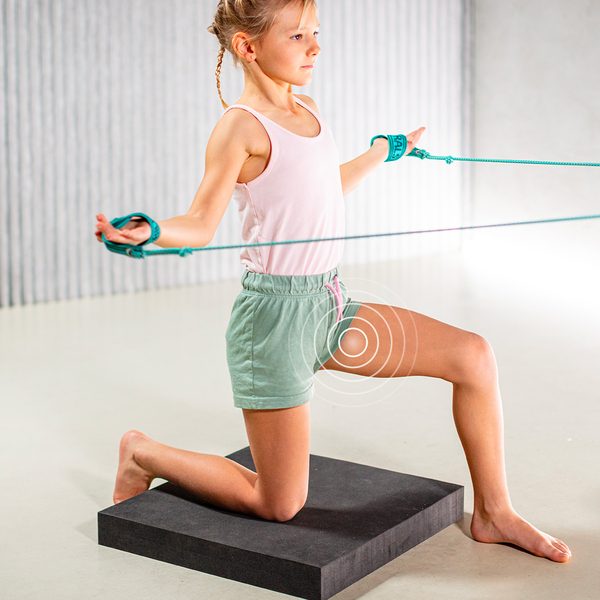
How it shows up
The pain shows up at the front, where the abdomen folds into the thigh. It gets stronger when pushing off, changing direction quickly, kicking, or squeezing the legs together. Mornings are quiet, warming up eases it, and the day after a hard session it is at its loudest.
It could be mistaken for hip pain, but that announces itself when walking and putting shoes on, whereas this one comes with pushing off and squeezing the legs together. The two often join forces.
Where it usually comes from
The adductors of the thigh and part of the abdominal muscles attach in the groin and pull against each other across the pelvis. As long as the pelvis holds vertical, the pull is balanced. As soon as it tilts — because the torso rotates in the lower back instead of the chest, or because one side works more — the attachment on one side starts taking more than it can carry.
That is why groin pain returns in people who have 'cured' it with rest. Rest lowers the load but leaves the asymmetry that was sharing it out unevenly.
How spiral stabilisation approaches it
Spiral stabilisation does not touch the groin directly. It returns the pelvis to vertical through the chains running from one shoulder to the opposite hip and teaches the torso to rotate in the chest. That spreads the pull of the adductors evenly across both sides.
The work is done standing and walking, in the position where the pain arises. Stretching the adductors alone relieves it for a few hours but leaves the asymmetry that overloads them.
When to see a doctor first
See a doctor if there is a palpable lump or bulge in the groin that grows when you cough — that tends to be a hernia and exercise will not resolve it. The same with fever, swelling, redness, or pain that does not ease even at rest.
In children and teenagers always when limping joins in; in them hip problems often announce themselves in the groin or the knee.
Related exercises
Exercises done for groin pain. You can read about them here; the full instructions and video are in the Spiralista app.
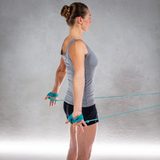
B3 Arrow
Arrow front standing
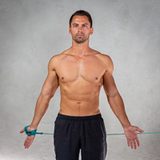
B9 Sideway Arrow
Sideway Arrow standing
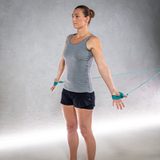
B10 Back Arrow
Back Arrow standing
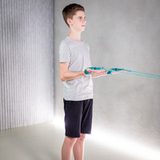
B1 Book
Book front standing
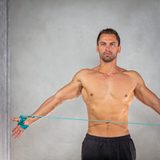
B5 Hitchhiker
Hitchhiker sideways standing
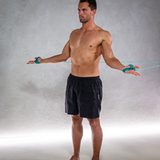
B8 Back Scales
Back Scales standing
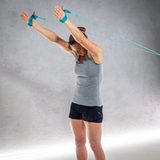
B11 Circles
Circles back standing
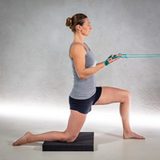
C29 Front Fencer
Front Fencer kneeling
What to do about it
A guide in the Spiralista app takes you through the exercises for this condition day by day — from the first exercise to the full sequence.
- At homeAn elastic cord and a bit of wall space are enough.
- ShortA few minutes a day, not an hour in the gym.
- Day by dayThe guide shows what comes next today.