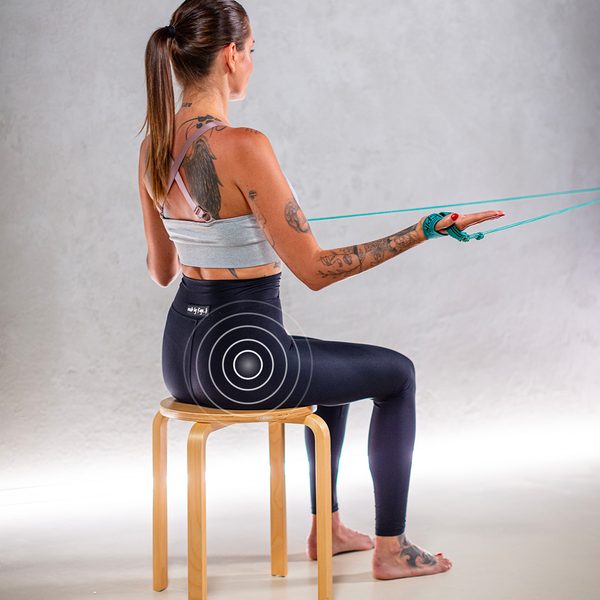
How it shows up
Most often it hurts in the groin, at the front — which is a surprise, because most people picture the hip joint at the side. The pain announces itself after a longer walk, when getting up from a low seat and when putting shoes on, where the knee has to come towards the chest.
It is also common for the stride to shorten on one side and for walking to become uneven. Uneven walking then adds pain in the pelvis and lower back, even though nothing was wrong with them to begin with.
Where it usually comes from
The hip carries several times body weight with every step and relies on the pelvis to hold it upright. When the pelvis tilts — because one side works more, or because the torso rotates in the lower back instead of the chest — the joint takes its load from the side rather than from above.
Add to that the shortening of the muscles at the front of the hip, which grows with sitting. Standing, the hip then never reaches full extension and the last part of each step is taken over by the lower back.
How spiral stabilisation approaches it
For the hip, spiral stabilisation does not focus on the hip. It works with the chains running from one shoulder to the opposite hip, and with walking — because it is in the step that you see whether the pelvis holds the vertical or tilts.
The exercises lengthen the front of the hip and at the same time teach the gluteal and oblique abdominal muscles to engage in the right order. That takes load off the joint — not by strengthening around it, but by stopping it from doing the torso's work.
When to see a doctor first
See a doctor if the hip hurts at rest and at night, if the range of movement is shrinking quickly, if the pain started after a fall, or if fever and swelling appear — that is no longer a question for exercise.
An examination is also needed if a child or teenager suddenly starts limping and complains about the knee; in children, hip pain often announces itself in the knee.
Related exercises
Exercises done for hip pain. You can read about them here; the full instructions and video are in the Spiralista app.
A3 Arrow
Arrow front sitting
A9 Sideway Arrow
Arrow sideways sitting
A10 Back Arrow
Back arrow sitting
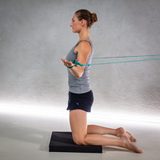
C25 Reeds
Reeds back kneeling
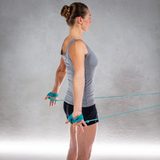
B3 Arrow
Arrow front standing
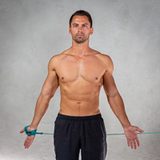
B9 Sideway Arrow
Sideway Arrow standing
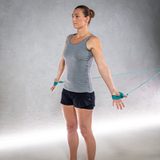
B10 Back Arrow
Back Arrow standing
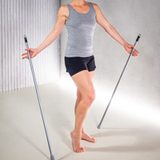
E43 Tourist
Tourist front shifting weight
What to do about it
A guide in the Spiralista app takes you through the exercises for this condition day by day — from the first exercise to the full sequence.
- At homeAn elastic cord and a bit of wall space are enough.
- ShortA few minutes a day, not an hour in the gym.
- Day by dayThe guide shows what comes next today.