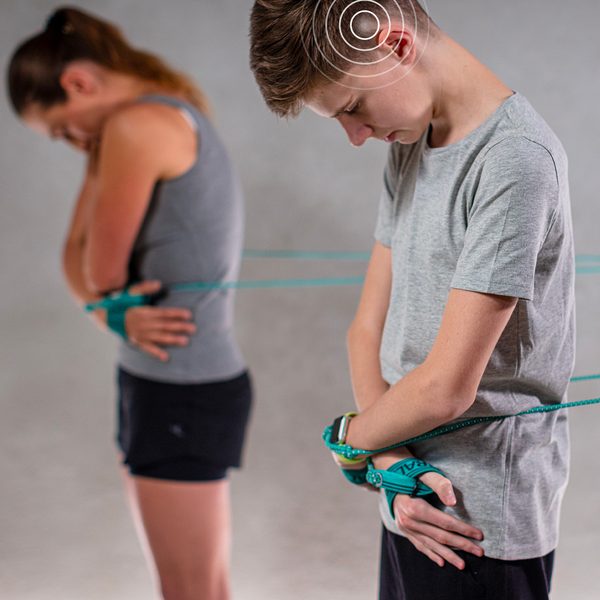
How it shows up
Pressure or a gripping band that starts at the base of the skull, runs over the crown and ends above the eyes or in the temples. Usually on both sides, dull, more squeezing than stabbing. It builds through the day rather than waking you with it.
The difference from migraine is worth remembering: this pain intensifies when you press on a tight muscle in the neck, and it does not usually bring nausea or light sensitivity. Migraine, by contrast, gets worse with movement and wants darkness and quiet.
Where it usually comes from
Short muscles at the base of the skull hold the head in a fine balance. When the head moves in front of the body's axis — over a monitor, over a phone — they have to pull several times harder and never get a rest. Overloaded, they send pain the brain does not feel in the neck but above the eye. Hence the impression that the head hurts.
The second source is the same as for the trapezius: shoulders lifted towards the ears. Add night-time jaw clenching and too little movement during the day, and an occasional headache turns into a daily one.
How spiral stabilisation approaches it
If the pain comes from how the neck stands, then what holds the neck has to change — and that is the shoulder blades and the chest, not the head. Spiral stabilisation straightens the thoracic spine and draws the shoulder blades down; the head returns above the body's axis and the short muscles under the skull stop pulling.
That is why there are no head circles and no pressing a palm into the forehead. Those work directly on what is already overloaded, and an overloaded muscle does not relax when you add work. Relief usually arrives before the posture changes — often within days, because these muscles respond quickly.
When to see a doctor first
Immediately: if the pain came on suddenly and is the worst you have known, if it comes with fever and a stiff neck, confusion, weakness on one side of the body or trouble speaking.
Promptly, though not as an emergency: pain that wakes you from sleep, started after a head injury, changes character, gets worse week by week, or is new after the age of fifty.
Related exercises
Exercises done for headaches coming from the neck. You can read about them here; the full instructions and video are in the Spiralista app.
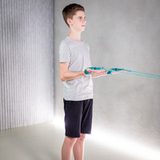
B1 Book
Book front standing
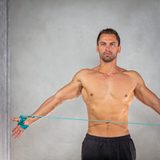
B5 Hitchhiker
Hitchhiker sideways standing
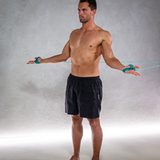
B8 Back Scales
Back Scales standing
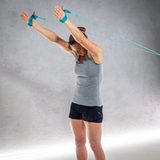
B11 Circles
Circles back standing
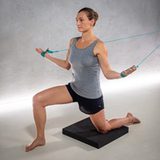
C31 Back Fencer
Back Fencer kneeling
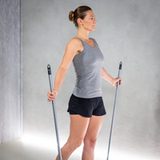
D33 Front Flamingo
Front Flamingo standing
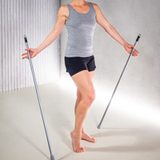
E43 Tourist
Tourist front shifting weight
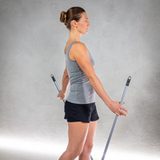
D34 Flamingo with wings
Flamingo with wings front standing
What to do about it
A guide in the Spiralista app takes you through the exercises for this condition day by day — from the first exercise to the full sequence.
- At homeAn elastic cord and a bit of wall space are enough.
- ShortA few minutes a day, not an hour in the gym.
- Day by dayThe guide shows what comes next today.