Article
Free scoliometer in the Spiralista app
What is scoliosis and how to detect it?
Scoliosis is an increasingly common problem these days, and not only in adults but unfortunately in children as well. It is a condition of the spine in which the spine curves and rotates in unnatural directions. The causes of scoliosis vary - sometimes it appears without a clear reason, at other times it is made worse by bad habits or weakened muscles.
According to a research study carried out in 2023 by Dr. Katka Smiskova and her colleagues at Czech schools, more than 42 % of children aged 6 to 15 have some form of spinal rotation. These results clearly show how important it is to pay attention to scoliosis and poor posture already in childhood. The key lies in education, prevention and early, correctly chosen treatment. Regular check-ups with a paediatrician may reveal visible changes in posture, but they are not always enough. Scoliosis in children can worsen quickly, and a paediatrician may not catch these changes during occasional examinations. That is why a more reliable way of detecting scoliosis early is needed. A simple and accessible route is regular measurement at home, which gives us the first indication of whether a child might have a problem with the spine.
Two tools for measuring
You can manage this basic screening at home using two easy methods: the visual Adams test and measurement with a scoliometer. In the Adams test the child bends forward, you watch their back for irregularities and look for signs of curvature. The scoliometer then complements this test with a more precise measurement of spinal rotation. Both methods are quick, simple and you can perform them completely free of charge. We have filmed the Adams test for you and the video can be found on YouTube. The scoliometer is available entirely free in the Spiralista app, including detailed instructions on how to measure with it.
What is a scoliometer?
A scoliometer is a practical device for measuring the degree of spinal rotation during the Adams test - it looks a little like a spirit level and shows how far the spine is deviated. You can use this tool at home for an indicative measurement, and physiotherapists use it routinely as well, for example to detect scoliosis in child patients in time and prevent its development. If the scoliometer measures a rotation of 3° or more, it significantly increases the likelihood that the person - whether child or adult - has scoliosis, which is an important signal that it would be worth seeing a specialist. Whether you are a parent or a physiotherapist, you will find the digital version of this reliable helper in the Spiralista app, which you can download and use free of charge both at home and in practice.
How to measure with a scoliometer?
Measuring with the scoliometer is genuinely simple and intuitive, anyone can manage it. In the Spiralista app you first start the scoliometer function and then follow the instructional video, which guides you through the process step by step. Just turn the phone horizontally and get ready to measure. The person being measured - child or adult - stands with their back to you and bends forward so that the spine is clearly visible. You start at the sacrum, where you place your thumbs under the phone, and move slowly up along the spine and back again. The aim is to find the place with the greatest rotation. The app then shows you the exact values, which you can track and compare.
The exact scoliotic curve and the degrees of spinal curvature will of course be determined by a doctor using magnetic resonance imaging. Measurement at home, however, plays a key role in prevention and it is worth not underestimating this step. If you suspect scoliosis in your children, detecting small deviations early can prevent more serious problems, such as spinal surgery or pain in adulthood.
More information can be found at www.scolio.com.
Related exercises
Exercises done for scoliotic posture. You can read about them here; the full instructions and video are in the Spiralista app.
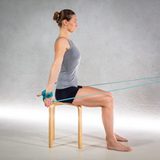
A3 Arrow
Arrow front sitting
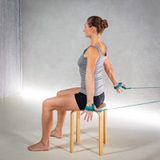
A10 Back Arrow
Back arrow sitting
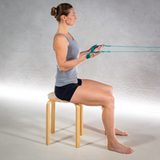
A1 Book
Book front sitting
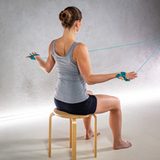
A2 Scales
Scales front sitting
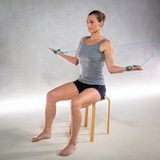
A8 Back Scales
Back Scales sitting
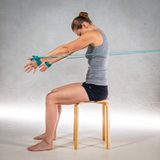
A11 Circles
Circles back sitting
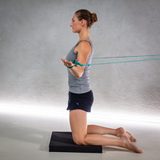
C25 Reeds
Reeds back kneeling
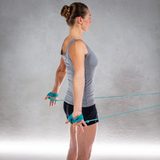
B3 Arrow
Arrow front standing