Article
Adams test for detecting scoliosis
What is the Adams test?
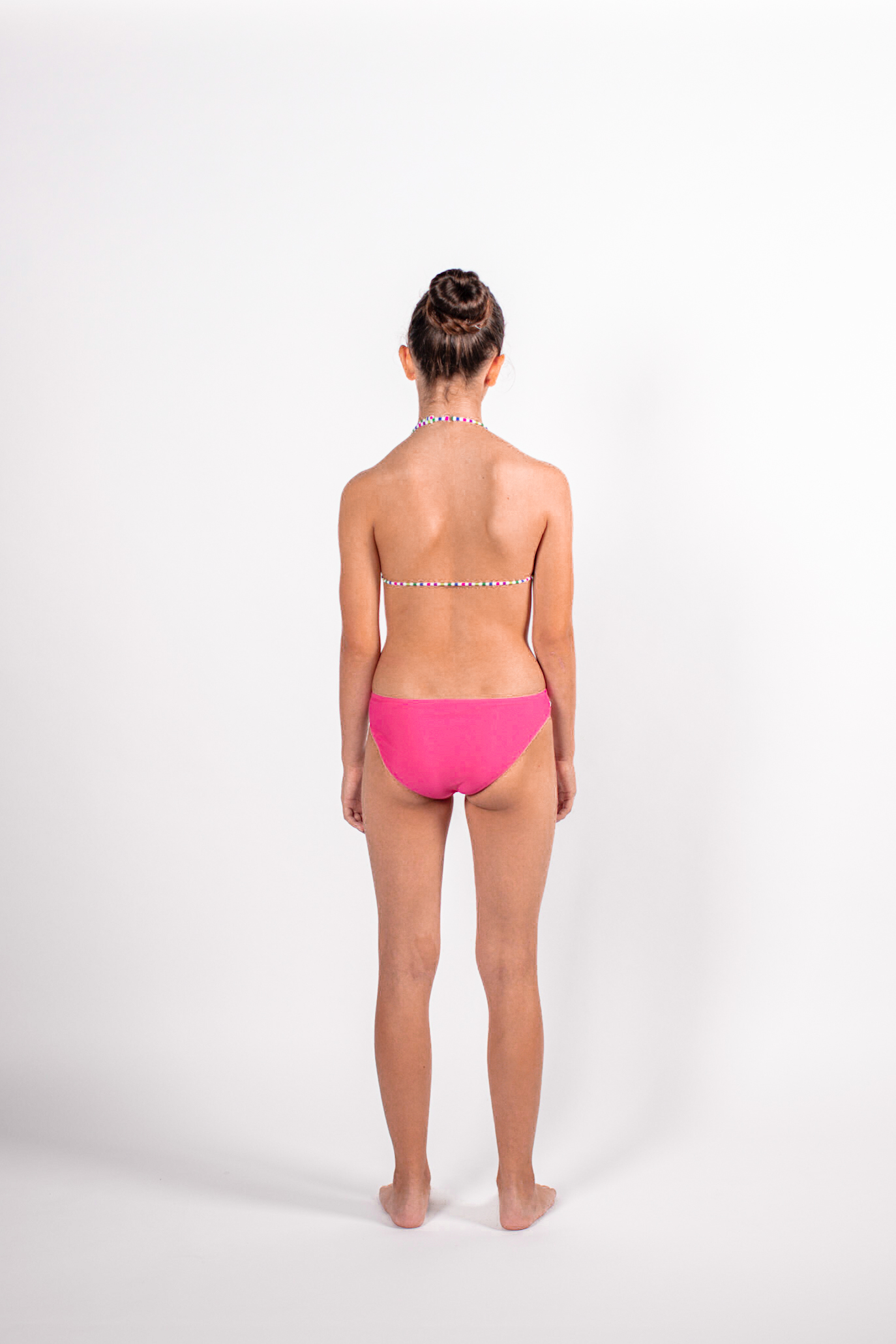
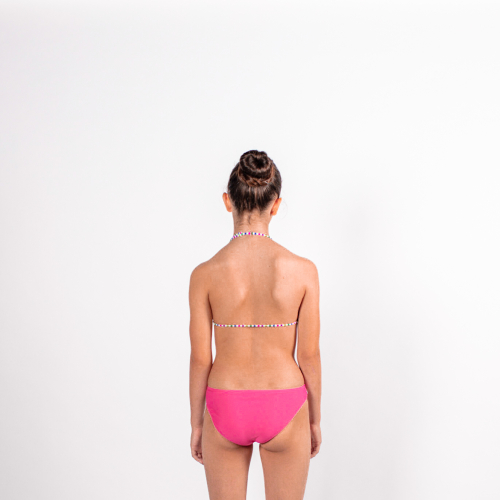
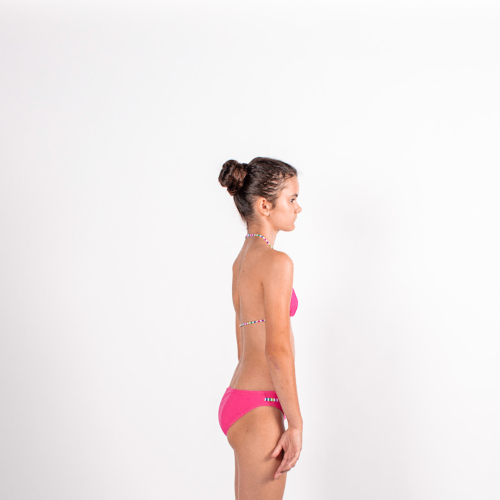
The Adams forward bend test is used to detect scoliosis in children and adults alike. It is a simple test you can do at home. During the test we watch the child's back while they bend forward and look for any unevenness. This makes it easy to find out in a home setting whether a child has scoliosis or scoliotic posture. Stand behind the child so that you look at their back at a right angle. The child stands with feet hip-width apart and arms relaxed. Their back should be bare so that you can see the curvature of the spine clearly. Now the child slowly lowers the head, then the chest, and bends vertebra by vertebra through the whole back into a deep forward bend.
What to look for during the Adams test:
- can you see any difference between the left and right half of the back?
- is the spine deviated to one side or the other?
- are the shoulder blades at the same height?
- do the shoulder blades have the same shape?
- are the shoulders level?
- are both buttocks at the same height?
- do the buttocks have the same shape?
- is one foot noticeably flat?
With a non-scoliotic spine you should see no difference at all. If you do see marked differences, it is likely that your child has at least poor posture.
Photographs showing how to perform the Adams test can be found HERE.
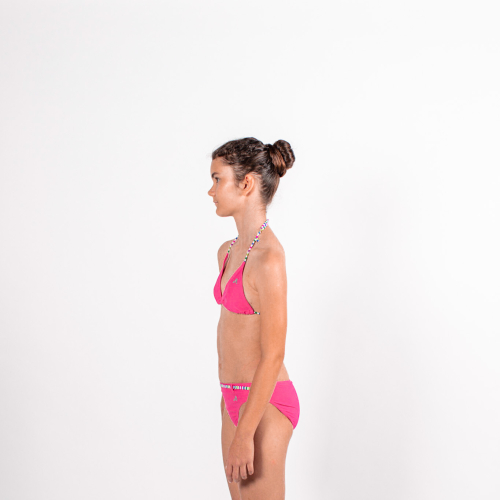
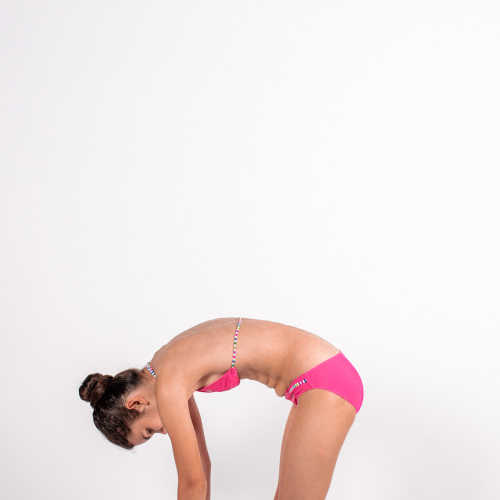
Related exercises
Exercises done for scoliotic posture. You can read about them here; the full instructions and video are in the Spiralista app.
A3 Arrow
Arrow front sitting
A10 Back Arrow
Back arrow sitting
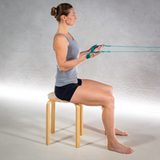
A1 Book
Book front sitting
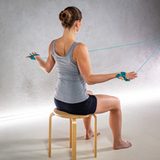
A2 Scales
Scales front sitting
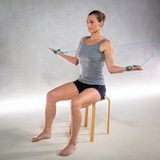
A8 Back Scales
Back Scales sitting
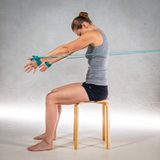
A11 Circles
Circles back sitting
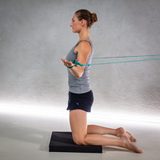
C25 Reeds
Reeds back kneeling
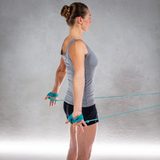
B3 Arrow
Arrow front standing