How it shows up
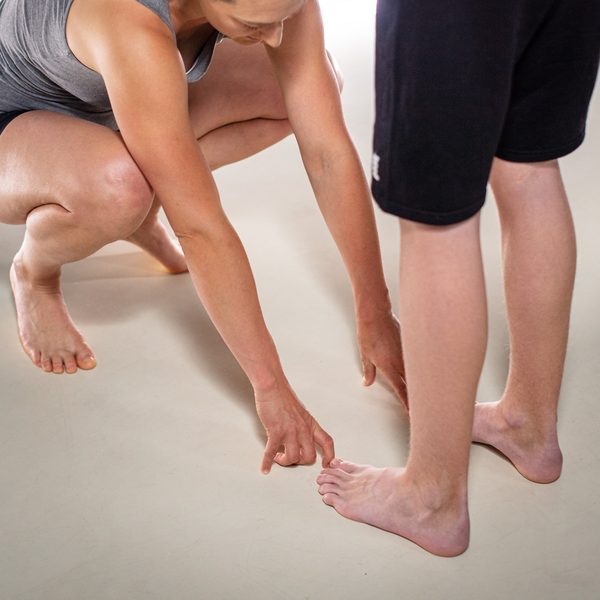
Feet that tire before the rest of the body, pain in the arch and the heel after a longer walk or a day standing. Shoes wear down on the inner side, a wet footprint has a narrower cut-out than it used to, and seen from behind the ankle rolls inward.
The pain can climb higher — into the knee and the lower back — because the axis of the leg breaks just above the foot. If you first want to know what flat feet are and how to spot them in a child, start with the article Flat feet; this page is about the exercises.
Where it usually comes from
The arch is not held by ligaments and the small muscles of the foot alone. It is pulled up by muscles that start as high as the shin and the thigh, and those only work when the leg stands in line. As soon as the pelvis tilts or the knee falls inward, the pull twists and there is nothing left to lift the arch.
Add footwear with a stiff sole and a flat surface under the whole foot. The foot has nothing to do in it — and a muscle that does not work does not go back to work on its own.
How spiral stabilisation approaches it
Spiral stabilisation does not train the arch from below. It aligns the whole leg from above: chains from one shoulder to the opposite hip hold the pelvis, the knee gets a straight path and the foot rests on three points — big toe, little toe, heel. Only in that position do the muscles have something to pull the arch up by.
The work is done standing and walking, because the arch works in the step, not sitting down. Scrunching a towel with your toes will not lift the arch while the leg above it keeps falling inward.
When to see a doctor first
See a doctor if the arch collapses suddenly and on one foot, if the inner side of the ankle is swollen and painful, or if the foot starts to tingle and weaken.
In children up to about four, a flat foot is normal and corrects itself. It needs examining when it is on one side only, when the child's foot hurts, or when the foot stops moving through its full range.
Related exercises
Exercises done for flat feet. You can read about them here; the full instructions and video are in the Spiralista app.
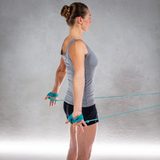
B3 Arrow
Arrow front standing
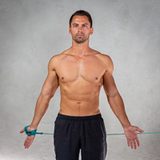
B9 Sideway Arrow
Sideway Arrow standing
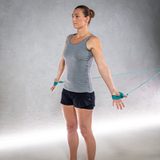
B10 Back Arrow
Back Arrow standing
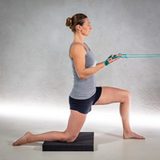
C29 Front Fencer
Front Fencer kneeling
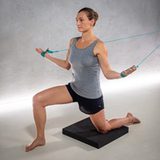
C31 Back Fencer
Back Fencer kneeling
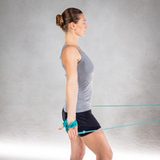
E3 Arrow
Arrow front shifting weight
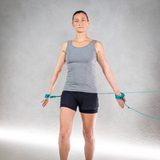
E9 Sideway Arrow
Sideway Arrow shifting weight
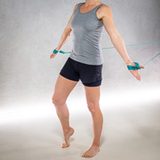
E10 Back Arrow
Back Arrow shifting weight
What to do about it
A guide in the Spiralista app takes you through the exercises for this condition day by day — from the first exercise to the full sequence.
- At homeAn elastic cord and a bit of wall space are enough.
- ShortA few minutes a day, not an hour in the gym.
- Day by dayThe guide shows what comes next today.